
Who Protects Your Capital When Construction Starts? That's Where We Come In.
Get full-cycle project oversight from someone who has built 5,600 units and managed the entire lifecycle. We are your owner’s representative when the stakes are highest.
Development management comes down to three pillars: protecting your capital, meeting your schedule, and ensuring the end product matches your vision. Having delivered over 5,600 units, we know exactly what can go wrong and, more importantly, how to prevent it.
Full-Cycle
Entitled Land to Certificate of Occupancy
Budget
And Schedule Guardian
What Is Development Management?
It is the full-cycle oversight of a real estate project, from the moment you hold entitled land through the final certificate of occupancy. It encompasses budget management, scheduling, general contractor (GC) oversight, municipal coordination, quality control, draw management, and the thousand details that determine whether a project succeeds or fails financially.
Not Construction Management
Construction managers are typically hired by the general contractor and report to them. Development managers work for you and report to you. We represent your interests, oversee the work, review costs, manage draws, and ensure the project remains on budget and on schedule. The GC builds it; we ensure they build it correctly, on time, and on budget.
The Owner's Representative Role
We act as your agent throughout the construction phase. We handle day-to-day coordination, attend on-site meetings, review invoices, process payment requests, manage contract change orders, and escalate problems before they become costly. We are the bridge between you (the owner), your architect, your lenders, and your contractor.
Why Developers Need This
Developers focus on capital, markets, and financing. Construction oversight is specialized work, and even experienced developers benefit from having a dedicated expert managing the construction phase. The cost of a development manager is typically 1% to 2% of the construction budget, and the savings generated by avoiding budget overruns alone pay for the service many times over. Plus, you sleep better knowing someone is protecting your capital.
What Happens When Development Management Fails
We have seen it happen repeatedly. Developers without development management generally face one or more of these problems:
Budget Overruns: Thousands Become Hundreds of Thousands
A $15M project can drift by $300K to $500K in change orders if no one is actively managing them. Small additions accumulate and scope creeps. Without someone questioning every change order, those costs turn into losses. We have prevented individual change orders exceeding $50K by detecting scope issues early.

Schedule Delays
Development managers catch schedule risks in the second week, not the sixth month. A three-month delay costs you carrying costs, lost lease-up time, and deferred revenue.
Contractor Disputes
We document everything in real time and keep both parties aligned, avoiding expensive litigation, as most disputes arise from misunderstandings or poorly documented scope.
Quality Failures and Endless Punch Lists
We conduct regular inspections, flag deficiencies immediately, and demand corrections before final payment.
Draw Mismanagement
We verify that every payment is supported by work actually performed, review lien waivers, and ensure compliance with lender requirements.
Our 6-Phase Development Management Process
1
Pre-Construction Planning
We begin 4 to 8 weeks before. We review contracts, identify risks, and establish protocols. This prevents 80% of problems.
2
GC Selection and Negotiation
We advise on the selection process and negotiate terms that protect you against common pitfalls.
3
Construction Oversight
Boots-on-the-ground work. Weekly meetings, site inspections, and alignment with architects and consultants.
4
Budget and Draw Management
On-site verification of every phase before payment release and certification to the bank.
5
Quality Control and Inspections
Inspections against architectural documents to identify flaws in real time.
6
Closeout and Certificate of Occupancy
Aggressive management of the punch list, final documentation, and warranty delivery. We do not hand over the keys until everything is finished.
Specific Development Management Services
Financial Management
Pre-construction budgeting, monthly actual vs. estimate reporting, and requisition certification.
Schedule Management
Critical path analysis, milestone tracking, and delay recovery plans.
GC Oversight
Performance monitoring, safety verification, and RFI (Request for Information) coordination.
Retainage management, lien waiver verification, and final payment release.
Field inspections, punch list management, and coordination with municipal authorities.
Real Projects, Real Results
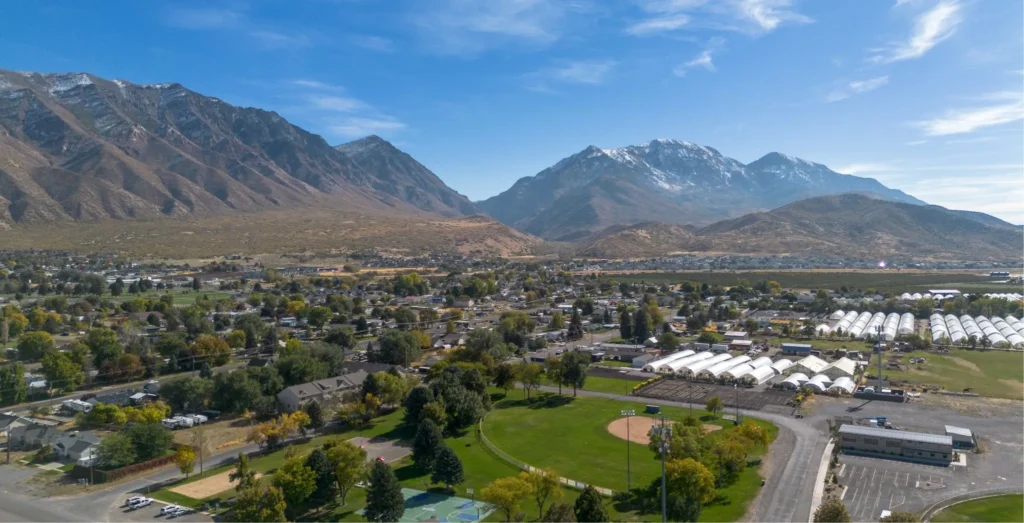
Sandy City: 240-Unit Residential Development
Managed from contractor selection through operation. Delivered on time and $185K under budget.
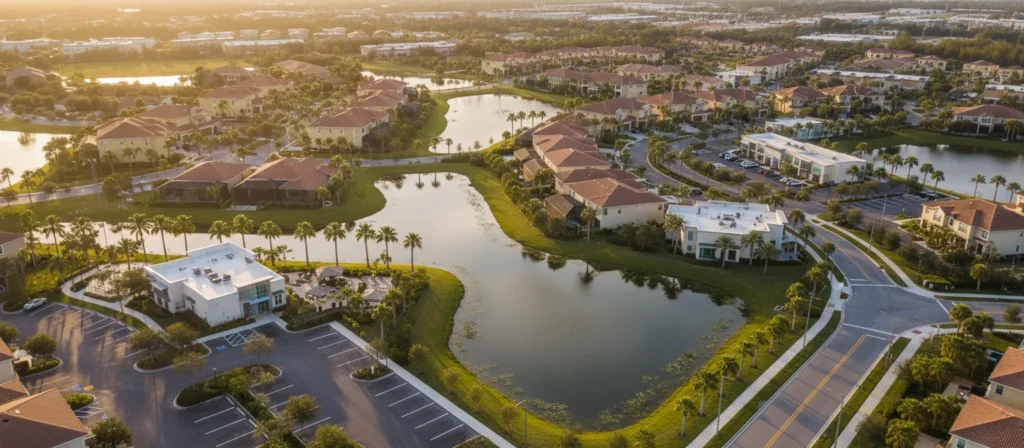
Lakewood Ranch: Mixed-Use with Environmental Constraints
Managed environmental constraints (wetland mitigation area) with zero environmental citations and full regulatory approval.
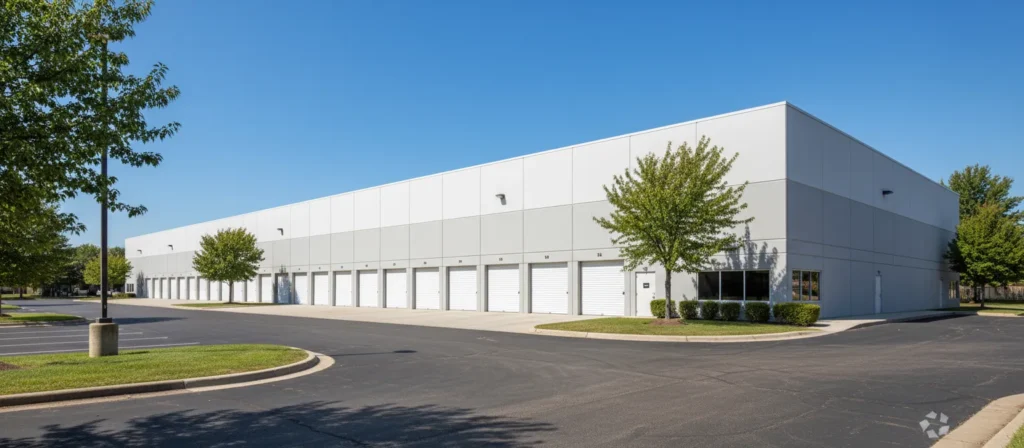
Heritage Warehouse: Adaptive Reuse to Self-Storage
Engineering solution for HVAC loads avoided a $120K overrun and generated a net savings of $45K.
Clarifying the Roles (And Why You Might Need Multiple)
Owner's Representative
Focused on daily execution and site-level tactics.
Development Manager (Us)
Focused on strategy, budget, compliance, and long-term vision. We work exclusively for you.
Construction Manager
Often works for the contractor; may have incentives misaligned with your budget.
Development Management in Florida: Know the State-Specific Landscape
We have deep knowledge of the Florida landscape: stringent hurricane-resistant building codes, FDEP (environmental) compliance, municipal inspection processes (Manatee and Sarasota), utility coordination (FPL and TECO), and strategic impact fee management.
Development Management Is Step 4: Connect With the Full Services Hub
Development Management is the final phase of our 4-step Services Hub lifecycle. Most developers complete three phases before reaching us:
Step 1: Land Selection and Due Diligence
Evaluate the land: Is it the right site? Are there environmental issues? Zoning challenges? Cost-of-carry implications? We start here, identifying risks and opportunities before you commit capital.
Step 2: Feasibility Studies
Will this project be profitable? We analyze financial modeling, market analysis, return projections, and risk assessment. Most developers move forward only after feasibility validation.
Step 3: Land Entitlement
Navigate government approvals: zoning changes, conditional use permits, site plan approvals, and environmental permits. Entitlement is the bridge between land and construction.
Step 4: Development Management (You Are Here)
Construction oversight from groundbreaking through the certificate of occupancy. Full-cycle project management protecting your capital, schedule, and quality.
Additional Consulting Services
Beyond development management, we offer ongoing consulting on construction issues, GC relationship management, and development strategy for future projects.
Frequently Asked Questions About Development Management
How do you protect capital?
Through clarity, active management, and accountability.
Do I need you if I have a good contractor?
Yes. The contractor looks out for their profit; we look out for yours.
What is the cost?
Typically between 0.75% and 2.5% of the total construction cost. The service usually pays for itself by avoiding a single major error.
What does a development manager do on a day-to-day basis?
It depends on the project phase and scale. During active construction, we typically attend weekly job site meetings, review draw requests, inspect work completed since the last visit, track progress against the schedule, manage any field changes or RFIs (Requests for Information), and report the project status to you. In other words, we are present enough to catch problems, but not so present that we micromanage the GC.
Can you manage my project remotely or do you need to be on-site?
We need to be on-site regularly, especially during active construction phases. Remote oversight is not sufficient because you cannot catch quality issues or verify work completion from a distance. That said, modern projects use photos, videos, and job cameras, so we supplement in-person visits with remote documentation. For projects in our immediate area (Tampa Bay and Southwest Florida), on-site visits are straightforward, and for projects in other regions, we can discuss the logistics.
What happens if the GC goes bankrupt or fails to perform?
That is why you have contractor bonding and why we retain funds (retainage). We actively monitor the contractor’s financial health and performance. If problems arise, we escalate immediately and work with your lender and the bonding company, helping you understand your options. We have even managed contractor replacement on active projects; it is disruptive, but we know how to minimize the impact.
Do you coordinate with lenders or just work for the owner?
We primarily work for you (the owner). That said, we coordinate extensively with your lenders because they fund the project and have a direct interest in its success. We provide lenders with draw certifications, progress reports, and cost updates as required by the loan documents, and lenders often appreciate our involvement because it protects their capital, too.
Ready for Development Management That Actually Protects Your Capital?
Start With a Free Discovery Call
Every engagement begins with a 30 to 45 minute discovery call. We learn about your project, your team, your timeline, your concerns. We explain exactly how we work and what to expect. There is no cost and no obligation, just a straightforward conversation about your development project and how we can add value.
- (941) 254-3144
- mike@integratedlandcc.com
- 1201 6th Ave W, Suite 100/220, Bradenton, FL 34205
Prefer to Send Project Details First?
Send us your project basics: property location, project type, budget, timeline, current status, and we will respond with a preliminary assessment of scope and approach for managing your project.
By submitting this form you agree to our privacy policy. We’ll never share your information.