
You Know How to Build. Now Learn How to Develop.
The Builder-to-Developer Transition Guided by Someone Who's Done It
You’ve built homes, managed crews, and delivered projects on time and on budget. You know construction inside and out, but now you’re looking at a piece of land and thinking: “Why am I building for other developers when I could be the developer?”
That’s exactly where Mike Miller was 30 years ago. A Licensed GC, experienced builder, and ready to control the whole process, Mike has made the transition from builder to developer and went on to build 5,600+ units across 8 states. Along the way, he learned what construction experience teaches you about development, and what it doesn’t.
ILCC exists to help builders like you make that same transition. Without the expensive trial-and-error., without the mistakes that kill first projects and with a consultant who’s been on your side of the table and knows exactly where the blind spots are.
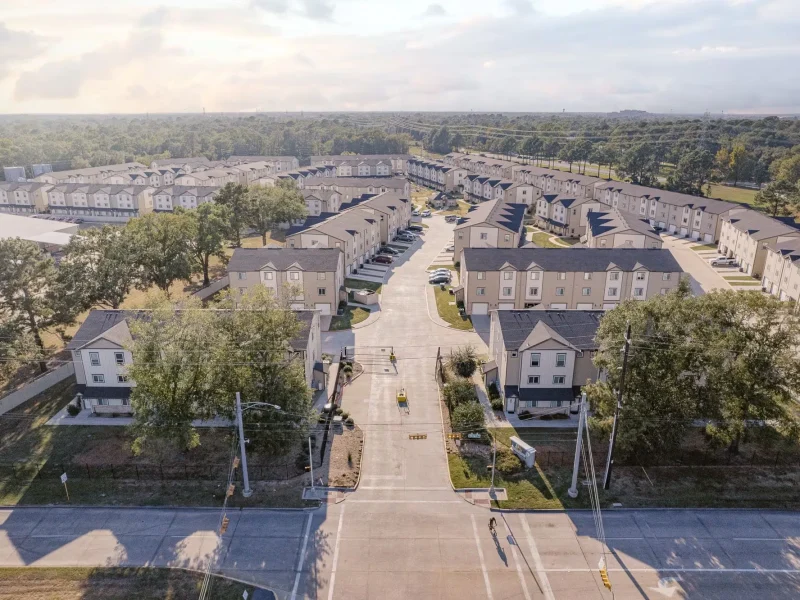
From Builder to 5,600+ Units
Built from the ground up. Mike Miller started as a builder and grew into one of the most experienced development consultants in the industry. That trajectory informs every piece of advice we give to transitioning builders.
As a licensed general contractor and developer. The builder-to-developer transition isn’t something we read about. It’s something Mike lived, project by project, for three decades.
Development experience across Utah, Idaho, Arizona, Texas, Florida, and beyond. Every state has different development rules. We’ve learned them all from the builder’s perspective.
1995
First Project
Everyone has a first development project. Mike’s was in 1995. Since then, he’s helped dozens of builders navigate their first (and second, and tenth) development projects with consulting that bridges the construction-to-development gap.
What Your Construction Experience Gives You That Other Developers Lack
You Understand What Things Actually Cost
Most first-time developers come from finance, real estate brokerage, or investment backgrounds. They’ve never held a hammer. They’ve never managed a subcontractor. They’ve never stood on a job site and known, instinctively, that a bid is 20% too high because the scope is padded. You have that instinct. It’s worth more than any MBA in real estate development. When you review a construction budget, you know what’s real and what’s fat. That’s a massive competitive advantage.
You Know What's Buildable
Some consultants and architects design projects that look great in a rendering but are nightmares to build. You see through that immediately. You know which site plans create construction access problems. You know which structural designs cost twice as much as they need to. You know which material specifications are overkill and which ones cut corners. That builder’s eye is irreplaceable in development.
You Have Trade Relationships
Development requires contractors, and you already know the good ones. You know who shows up on time, who bids honestly, and who has the capacity for your project. Most first-time developers spend months vetting contractors. You’ve already done that work across your entire career.
You Understand Timelines
Development projects fail when timelines slip. You know that concrete needs 28 days to cure, that framing takes X weeks for Y units, that inspections have backlogs in certain municipalities. That timeline intuition prevents the optimistic scheduling that kills first-time developer pro formas.
What Construction Experience Doesn't Teach You About Development
Here’s the honest truth: construction expertise gets you halfway. The other half is where builders get hurt on their first development project. These are the gaps ILCC fills.
Feasibility Analysis
You know what it costs to build. But do you know whether the market will absorb what you build, at the price you need, in the timeline your pro forma assumes? Feasibility analysis is a different discipline than construction estimation. It requires market research, absorption modeling, competitive analysis, and financial sensitivity testing. Most builders skip this step or do it on a napkin. That’s how first projects lose money.
Land Entitlements and Zoning
You’ve pulled building permits. Entitlements are different. Rezoning applications, variance hearings, comprehensive plan amendments, PUD negotiations, and impact fee calculations operate in a political and regulatory environment that construction permitting doesn’t prepare you for. A 6-month entitlement delay can blow your entire deal timeline. ILCC navigates entitlements because we’ve been through the process hundreds of times in Florida.
Development Financing
Construction loans and development loans are different products with different underwriting standards. Development lending involves land acquisition financing, horizontal infrastructure loans, and vertical construction financing, often as separate tranches with different draw schedules and interest rates. Your construction lending relationships don’t automatically transfer to development lending. Understanding the capital stack is critical.
Market Analysis and Exit Strategy
As a builder, your client tells you what to build. As a developer, you decide what to build. That decision requires market analysis: what does this submarket need? What are competing projects delivering? What rent or sale price can you realistically achieve? What’s the absorption timeline? Getting this wrong means building something the market doesn’t want.
Risk Management at the Development Scale
Construction risk is familiar: weather delays, material cost increases, subcontractor issues. Development risk is broader: entitlement denials, market shifts between feasibility and delivery, interest rate changes, competing project announcements, regulatory changes. The risk profile of development is fundamentally different from construction. ILCC helps builders understand and manage development-scale risk.
How Mike Miller Made the Builder-to-Developer Transition
Started as a Builder
Mike Miller began his career as a licensed general contractor in 1995. He built homes. He managed construction projects. He understood every aspect of the physical building process. But he kept watching developers make decisions that didn’t make construction sense, and he kept thinking: “I could do this better.”
Made the Jump
Mike’s first development project combined everything he knew about construction with everything he had to learn about land acquisition, feasibility, entitlements, and market analysis. He made mistakes. He learned lessons that you can’t learn from a textbook. The first project led to the second, which led to the third, which eventually led to 5,600+ units across 8 states, including the 240-unit Sandy City apartment complex and properties spanning 4 states under management.
Now Helps Builders Do the Same
ILCC was founded because Mike recognized that builders are the best-positioned people to become successful developers. They already have the hardest skill set (construction expertise). They just need guidance on the other half: feasibility, entitlements, financing, and market strategy. That’s what ILCC provides. Not generic development advice. Specific, builder-focused consulting from someone who made the exact same transition.
Five Mistakes Builders Make on Their First Development Project
Mistake 1: Skipping Feasibility Because "I Know What It Costs to Build"
Construction cost knowledge is half the feasibility equation. The other half is revenue: market rents, absorption timeline, competitive supply, and pricing sensitivity. Builders often assume that because they can build it cheaply, the project is automatically profitable. That’s only true if the market supports the revenue side of the pro forma. ILCC runs the full feasibility analysis so you know both halves before committing capital.
Mistake 2: Treating Entitlements Like Building Permits
Building permits are administrative: submit plans, meet code, get approval. Entitlements are political: present to a planning commission, address community concerns, negotiate conditions of approval, and hope the board votes yes. Builders who approach entitlements with a permit-pulling mindset get blindsided by the timeline, the politics, and the conditions. ILCC manages entitlements as the complex regulatory process they actually are.
Mistake 3: Using Construction Lenders for Development Financing
Your construction lender may not offer development loans. Even if they do, the terms for land acquisition and horizontal infrastructure are different from vertical construction. Builders who try to finance development with construction loan structures often face draw schedule mismatches, higher equity requirements, and recourse terms that don’t match the risk profile. Understanding the development capital stack is essential.
Mistake 4: Overbuilding Because They Can
Builders take pride in quality. That pride becomes a liability in development when it means spending $15,000 more per unit on finishes that the market won’t pay a rent premium for. Development requires building to what the market will pay, not to what your construction standards prefer. ILCC helps builders calibrate quality to market positioning.
Mistake 5: Not Having an Exit Strategy Before Groundbreaking
Builders are accustomed to building and moving on. Development requires an exit strategy planned before construction starts. Are you holding and renting? Selling at stabilization? Refinancing into permanent debt? Each exit strategy affects construction decisions, financing structure, and timeline. ILCC ensures the exit strategy is defined during feasibility, not improvised during lease-up.
How ILCC Guides Your Builder-to-Developer Journey
Most builder-developers engage ILCC in a specific sequence. Here’s the typical path.
Step 1: Feasibility Study
Before you commit to a project, know whether it works financially. ILCC builds a complete feasibility model: construction costs (where your expertise validates our numbers), revenue projections (where our market analysis fills your gap), and financial returns under multiple scenarios. This is the single most important step for a first-time developer.
Step 2: Land Entitlement
Once feasibility is confirmed, ILCC navigates the entitlement process: zoning analysis, application preparation, planning commission representation, and conditions of approval negotiation. We handle the political and regulatory dimension that your construction experience didn’t prepare you for.
Step 3: Land Selection & Due Diligence
If you haven’t acquired land yet, ILCC evaluates sites from both a development and construction perspective. Most due diligence misses construction-specific factors (soil conditions, grading costs, utility routing complexity). Ours doesn’t, because it’s conducted by a team with GC experience.
Step 4: Development Management
During construction, ILCC serves as your development management advisor. You manage the build (that’s your expertise). We manage the development economics: budget tracking against the pro forma, draw schedule coordination with lenders, change order impact on project returns, and delivery timeline alignment with market conditions.
What Are You Planning to Build?
Your first development project will fall into one of these categories. Each one has unique feasibility, entitlement, and construction dynamics that ILCC can help you navigate.
Multifamily Development
Apartments, condos, townhomes. The most common first project for builders transitioning to development. ILCC has built 5,600+ multifamily units.
Mixed-Use Development
Combining residential with commercial components. More complex, but often more profitable. Requires cross-component feasibility that goes beyond construction planning.
Residential Subdivisions
Lot development. Infrastructure-heavy, cash-flow-front-loaded-negative. The natural progression for custom home builders moving into development.
Commercial & Retail
Retail centers, office, industrial, adaptive reuse. Different economics (lease-driven, tenant credit) but the construction knowledge transfers directly.
Questions Builders Ask About Becoming Developers
How do I become a real estate developer if I'm already a builder?
You already have the hardest part: construction expertise. The transition requires adding four skills: feasibility analysis (can this project make money?), entitlement navigation (can it get approved?), development financing (how do you structure the capital?), and market analysis (what should you build?). ILCC provides consulting on all four, specifically tailored to builders who already understand construction. You don’t need a degree or a license to be a developer. You need market knowledge, financial modeling skills, and experienced guidance.
What's the biggest risk for a builder becoming a developer?
Building something the market doesn’t want. As a builder, your client tells you what to build. As a developer, you make that decision. If you skip feasibility analysis and build based on construction instinct alone, you risk delivering a product that doesn’t match market demand. The second biggest risk is underestimating the entitlement timeline, which can blow your financial model.
Do I need a real estate license to become a developer?
No. Real estate development doesn’t require a real estate license. A real estate license is for buying, selling, or leasing property on behalf of others. Development is building property on your own behalf. However, your existing GC license is a major asset. It allows you to act as your own general contractor, eliminating the GC markup on your first projects.
How much money do I need for my first development project?
It depends entirely on the project type and scale. A small infill subdivision might require $200K-$500K in equity. A 50-unit apartment project might require $1M-$3M in equity, with the rest financed through development loans. ILCC’s feasibility study models the exact capital requirements for your specific project before you commit any funds.
How is development financing different from construction financing?
Construction loans fund the vertical building. Development loans fund everything before that: land acquisition, infrastructure, entitlements, and site work. Development loans typically have higher equity requirements (25-35% vs. 10-20% for construction), different draw schedules, and different interest rate structures. Some projects require separate tranches for land, horizontal infrastructure, and vertical construction. ILCC helps you understand the capital stack before you approach lenders.
Can ILCC help me find my first development project?
ILCC doesn’t source deals or broker land. But we can evaluate properties you’ve identified, run feasibility analysis on potential sites, and advise on what project types your market supports. Many builder-developers find their first projects through existing relationships: a landowner who needs a builder, a lot that didn’t sell, or a parcel adjacent to a project they’ve already built.
What's different about ILCC's consulting for builders vs. general development consulting?
Most development consultants advise from a finance or real estate background. ILCC advises from a construction background. Mike Miller was a builder first. He understands the builder’s mindset, the builder’s advantages, and the builder’s blind spots because he’s lived them. Our consulting doesn’t waste time explaining construction basics. It focuses on the specific gaps that builders need to fill: feasibility, entitlements, financing, and market strategy.
Ready to Make the Transition?
Let's Talk About Your First (or Next) Development Project
The builder-to-developer transition doesn’t require a leap of faith. It requires a feasibility study, an entitlement strategy, and a financial model. We’ll help you build all three. The first step is a conversation about the project you’re considering, the market you’re in, and the resources you have. No commitment. No sales process. Just a straight conversation with a developer who started exactly where you are.
Initial consultations are always free.
Contact ILCC Directly
- (941) 254-3144
- mike@integratedlandcc.com
- 1201 6th Ave W, Suite 100/220, Bradenton, FL 34205